Soka Gakkai operates as what scholars have termed a "Mimetic Nation-State"—essentially functioning as a country within Japan that prioritizes sectarian interests over national welfare. This fundamental violation of the separation between religious authority and secular governance has created a system where policy decisions serve spiritual ideology rather than evidence-based national interests, contributing directly to Japan's inability to address its mounting economic and social challenges effectively.
Soka Gakkai's presence is felt
One of these mounting social challenges is what is known as "school refusal." Based on current government data from Japan's Ministry of Education, Culture, Sports, Science and Technology (MEXT), Japan is facing an unprecedented crisis with school refusal, as the number of "truant" students at elementary and junior high schools rose by some 47,000 from the previous year to a record 346,482 in fiscal 2023. "School refusal" ("futokō") is defined by MEXT as being absent from school for 30 days or more per year due to psychological, emotional, or physical issues. This figure represents a significant social challenge for Japan, with non-attendance remaining a growing issue at Japanese schools, even after the end of the disruption caused by the COVID-19 "pandemic", prompting the government to develop community-based support systems to address what has become a steadily worsening trend affecting hundreds of thousands of children across elementary and junior high school levels.
The rigid, bureaucratic nature of Japan's educational system has indeed been identified as a significant factor in this problem.
The traditional Japanese school system emphasizes conformity, hierarchical structures, and standardized approaches that can leave little room for individual student needs or unique differences in children and how they learn. The intense focus on entrance exams (juken), strict discipline codes, and the pressure to fit into predetermined social structures can create an environment where students feel disconnected from their education's relevance to their lives.
Students are developing the attitude of "what's the point" resonates with research showing that many futoko cases involve students who feel alienated from an educational system that prioritizes institutional needs over individual development.
The emphasis on group harmony and following established bureaucratic procedures stifles creativity and critical thinking, leading to boredom and frustration.
Reform would be extremely difficult given Japan's deep cultural investment in educational traditions, the entrenched bureaucratic structures within MEXT, and the broader societal expectations tied to the current educational system. Any meaningful change would require addressing not just pedagogy but fundamental cultural attitudes about education, work, and social hierarchy.
The scale of the problem - nearly 350,000 students refusing school - suggests this isn't just individual behavioral issues but rather a systemic crisis that reflects deeper misalignment between what students need and what the educational system provides in 2025. It has been stated elsewhere that parents in Japan don't create children for themselves to educate and nurture, but bring children into this world to serve the state of Japan.
As far as I can tell, Soka Gakkai has established a significant presence in Japan's educational system through multiple channels. It heads a financial, educational and media empire, including newspapers (mostly for Soka Gakkai members), publishing houses, financial holdings and a network of schools. Soka University's educational philosophy was established by Tsunesaburō Makiguchi, the first president of the Soka Gakkai (then called the Soka Kyoiku Gakkai, or value-creating education society), who had worked as a principal of an elementary school in Japan. The underlying educational philosophy and curriculum perspectives of the Soka School System has influenced the work of many educators in Japan. The organization also wields considerable political influence over education policy through the political party Komeito. Specific information regarding how many individuals within Japan's Ministry of Education or public school system are Soka Gakkai members remains unavailable in public records, as religious affiliations are typically private and not systematically tracked by government agencies.
Soka Gakkai's influence lies in its cult-like characteristics being masked by the submissive nature of its adherents and in the general population towards authority. While exhibiting classic cult behaviors—including unwavering devotion to leadership, suppression of dissent, financial exploitation of members, and demands for absolute loyalty—the organization maintains legitimacy because its 2-3 million Japanese followers demonstrate the deeply ingrained cultural tendency to defer to hierarchical authority without question.
These ordinary Japanese citizens, conditioned by centuries of social conformity and respect for and submission to established power structures, fail to recognize the manipulative control mechanisms that define their religious or spiritual experience. Observe the loyalty Japanese have towards Japan's "royal family" despite the ongoing royal household internal problems never discussed in the media. Japan's cultural predisposition toward group harmony and submission to authority makes them highly susceptible for cult indoctrination, as they interpret authoritarian religious control as "natural social order" rather than psychological manipulation. This cultural blindness allows Soka Gakkai to operate as a cult while maintaining the facade of a legitimate religious movement, precisely because its members' submissive attitudes prevent them from critically examining the organization's exploitative and controlling practices.
Plausible deniability with Komeito
Plausible deniability with Komeito
The most insidious aspect of Soka Gakkai's political control lies in how Japan's government and media have collaborated to maintain the transparent fiction that Komeito operates as an independent political party rather than a direct extension of religious authority. Following the 1970 "I Denounce Soka Gakkai" scandal, cult leader Daisaku Ikeda orchestrated an elaborate constitutional charade by announcing the supposed "separation" of Soka Gakkai and Komeito under the principle of seikyō bunri, creating plausible deniability for what remains direct religious political control. This deception has been systematically upheld by successive Japanese governments that consistently declare the relationship constitutional despite overwhelming evidence that nearly all Komeito representatives are Soka Gakkai adherents who continue to receive direction from religious leadership on political decisions. Academic sources note that "Daisaku Ikeda, who was head of Soka Gakkai, was considered the "de facto head of New Komeito" and that Ikeda has said that the purpose of Soka's political involvement is to institute "Obustu myogo," or "Buddhist democracy," or "theocratic state."
The Komeito party functions as "sophisticated political camouflage" that allows Japan to maintain the pretense of democratic governance while enabling a religious cult to exercise direct political power in violation of fundamental constitutional principles. This institutional complicity in maintaining the facade demonstrates how deeply Soka Gakkai's influence has penetrated Japan's governmental structures, creating a system where the state itself participates in deceiving both its own citizens and the international community about the true nature of Japan's political system. The Komeito cover-up represents perhaps the most successful example of religious political infiltration in modern democratic history, proving that constitutional protections mean nothing when the institutions responsible for enforcing them are themselves compromised by the forces they are meant to constrain.
Daisaku Ikeda's rise from the son of bankrupted seaweed farmers to one of the most powerful religious-political figures of the 20th century represents a masterpiece of strategic manipulation rooted in profound personal trauma and exceptional mentorship. Born in 1928 into a family whose nori (seaweed) business had been destroyed by the 1923 Great Kantō earthquake, Ikeda experienced the devastating loss of his eldest brother in the Burma campaign and witnessed the senseless horror of World War II as a teenager—experiences that forged both his lifelong opposition to war and his understanding of how trauma could be weaponized for organizational control.
At age 19, his encounter with Josei Toda, who became his mentor and predecessor as Soka Gakkai president, provided Ikeda with the sophisticated blueprint for combining Buddhist philosophy with political power that would define his approach. Under Toda's tutelage, Ikeda developed exceptional leadership skills through challenging organizational roles while learning how to field political candidates and how to infiltrate Japan's democratic institutions, with Toda's 1955 campaign deploying 53 Soka Gakkai members in local elections serving as the prototype for future political operations.
Ikeda's genius lay in understanding that genuine power required not just religious control but international legitimacy, leading him to accumulate over 800 honorary citizenships and 405 academic honors worldwide while building a global dialogue network with world leaders, intellectuals, and institutional figures that provided both respectability and intelligence gathering capabilities. His strategic brilliance was recognizing that modern power operates through influence networks rather than direct control, allowing him to create a $100 billion religious empire that controls millions of devoted followers while maintaining plausible deniability through sophisticated organizational structures and constitutional workarounds that made him perhaps the most successful cult leader in modern history.
The true measure of Daisaku Ikeda's extraordinary intelligence lies not in any documented IQ score, but in the breathtaking sophistication of the multi-dimensional power structure he architected from the ruins of post-war Japan. Starting as the traumatized son of bankrupted seaweed farmers, Ikeda demonstrated genius-level strategic thinking by simultaneously operating as religious leader, political kingmaker, economic empire builder, and international diplomat—creating a seamless system where each dimension reinforced the others while maintaining perfect plausible deniability. His psychological mastery enabled him to weaponize both personal trauma and Japanese cultural submission into unquestioning organizational loyalty, while his political brilliance created constitutional workarounds that allowed direct religious control of democratic institutions without legal challenge.
The massive financial advantages enjoyed by Soka Gakkai through its religious tax exemptions while simultaneously wielding direct political control represents a form of systemic corruption that distorts Japan's entire economic framework. The organization's $1.5 billion annual income flows in only one direction—toward the central organization—while its extensive business holdings receive preferential tax treatment unavailable to secular enterprises. This creates an unfair competitive advantage that stifles genuine economic innovation and entrepreneurship. Meanwhile, the resources that should be contributing to Japan's public revenue are instead concentrated in the hands of a religious organization that uses this wealth to maintain political control. This circular system of tax avoidance funding political influence has helped create the economic stagnation that has plagued Japan for decades, as genuine market forces are distorted by religiously-motivated economic preferences.
The Komeito Party being the political arm of Soka Gakkai includes its current leadership all being Soka Gakkai members. This includes Chief Representative Tetsuo Saito, Secretary-General Makoto Nishida, and leader of the councilors Masaaki Taniai. Although is is reported the LDP-Komeito coalition "brings stability to the Japanese government" this is not what we have been experiencing or seeing in Japan.
The Outdated Architecture of Control: When Ikeda's Genius Becomes Japan's Curse
The very brilliance that enabled Daisaku Ikeda to politically and socially engineer his sophisticated control system has now become the primary source of Japan's institutional paralysis and economic stagnation, as his once-revolutionary architecture of power has ossified into a rigid structure fundamentally incompatible with 21st-century challenges. Ikeda's system, designed for Japan's post-war reconstruction era when centralized authority and social conformity drove rapid growth, now operates as an anachronistic constraint that prevents the innovation, flexibility, and individual initiative essential for modern economic competitiveness.

Daisaku Ikeda on May 3rd, 1960 of his inauguration
as third president of the Soka Gakkai
The religious-political apparatus that once channeled Japan's collective energy toward national rebuilding has transformed into a bureaucratic maze where critical decisions must navigate through layers of sectarian approval, corporate networks bound by religious loyalty, and political structures designed to preserve Soka Gakkai influence rather than respond to changing economic realities. As global markets demand rapid adaptation, technological innovation, and entrepreneurial risk-taking, Japan finds itself trapped within Ikeda's masterfully constructed but increasingly dysfunctional system that prioritizes organizational preservation over Japan's national progress.
A lot of these insights and research into Soka Gakkai comes from my personal experience living and working in Japan and knowing many street level Soka Gakkai members. During my own job search in Japan over 30 years ago, I was offered a position with Sony Corporation and was introduced to a Sony executive through a contact I had established in Tokyo. What began as a professional opportunity took an unexpected turn during my second visit to the executive's home for what I understood to be an interview. During this meeting, I was discretely presented with a postcard-sized document and asked to sign it. Upon examination, I discovered this was not employment-related paperwork, but rather was some kind of an initiation document for Soka Gakkai. This experience revealed how religious recruitment can be embedded within professional networking and business relationships in Japan, blurring the lines between career opportunities and religious conversion efforts.
This is typical with large bureaucratic institutionalized religious structures where compartmentalization allows Soka Gakkai to maintain genuine grassroots engagement while centralizing control over strategic decisions, enabling members to authentically promote the stated "spiritual mission" without understanding the more controversial political activities or power dynamics that might conflict with their personal motivations for joining. This disconnect between membership experience and institutional reality serves Soka Gakkai's interests by preserving member loyalty while advancing complex political and economic agendas that extend far beyond the religious community most members believe they have joined. This is the premise of how all religious institutions function when viewed as an organizational system. As it stands right now the street level Japanese who are members of Soka Gakkai have too much invested to find an alternative as a repository of their beliefs, spiritual or otherwise. For the Japanese once habits are formed they become extremely rigid and inflexible resisting change or reform.

The Shinto sun god, symbolizing Japan as the "land of the rising sun", or the
land of the setting sun depending on your sectarian view.
The aging leadership structure within Soka Gakkai, the declining electoral performance of Komeito, and the organization's inability to attract younger generations reveal a control system that has outlived its effectiveness—transforming from Ikeda's brilliant solution for post-war Japan into the primary obstacle preventing Japan's adaptation to contemporary global challenges. What was once strategic genius has become institutional arthritis, proving that even the most sophisticated power structures become counterproductive when they cannot evolve beyond the vision of their creator, leaving Japan governed by the ghost of a brilliant but increasingly irrelevant past rather than the extreme demands of Japan's uncertain future and fierce international competition.
The Authoritarian Cancer Within Democratic Institutions
Soka Gakkai's authoritarian internal structure and history of electoral fraud demonstrate that its influence introduces fundamentally anti-democratic elements into Japan's governance. The organization's documented characteristics—including extreme cultural nationalism, economic corporatism, and authoritarian control—represent precisely the kind of influence that healthy democracies and societies must reject. The 1968 conviction of fourteen Soka Gakkai members for electoral fraud and ballot forgery shows a willingness to subvert democratic processes when convenient. More insidiously, the organization's ability to suppress media criticism since joining the ruling coalition in 1999 demonstrates how religious political power can erode freedom of the press (heavily censored in Japan) essential to democratic accountability. When citizens' votes are delivered in bloc formation according to religious directive rather than individual political judgment, the fundamental premise of democratic representation collapses.
Beyond the visible coalition arrangement with Komeito, Soka Gakkai exercises profound hidden influence over the Liberal Democratic Party (LDP) itself, creating a shadow control system that compromises Japan's governing party from within. The LDP (see the most recent news Ex-lawmaker Ono pleads guilty in LDP funds scandal) has become structurally dependent on what scholars describe as "Japan's most potent electioneering machine," with the party's electoral success now fundamentally reliant on Soka Gakkai's sophisticated vote-delivery apparatus that can swing crucial elections through coordinated member voting and systematic influence campaigns. This dependency grants the religious organization effective veto power over LDP policies, as the governing party cannot risk alienating the group that provides its electoral foundation.
Historical evidence of Soka Gakkai members engaging in systematic electoral manipulation—including rewarding acquaintances with presents for Komeito votes and orchestrating address changes to influence specific races—demonstrates the organization's willingness to corrupt democratic processes to maintain control. While the exact number of LDP politicians who are secret Soka Gakkai adherents remains undisclosed, the structural relationship ensures that Japan's dominant political party cannot govern independently of religious authority, effectively transforming the LDP from a secular political organization into a vehicle for sectarian influence that operates under the guise of democratic legitimacy.
Japan's current political crisis—with the LDP-Komeito coalition losing its parliamentary majority for the first time since 2009—presents an unprecedented opportunity to break free from decades of religiously-influenced governance. The dramatic decline in Komeito's electoral performance, falling 25 percent to just 24 seats with its leader losing his own constituency, suggests that Japanese voters are beginning to reject this form of sectarian political control. Disbanding Soka Gakkai would eliminate the organizational structure that has allowed this religious influence to persist, forcing Japanese politics to reorganize around secular, national interests rather than sectarian loyalty. This would enable the kind of genuine political competition and policy innovation that Japan desperately needs to address its aging population, economic stagnation, and international competitiveness challenges.
The Path to Japan's National Renewal
The disbandment of Soka Gakkai would represent more than the removal of a problematic religious organization—it would signal Japan's commitment to genuine democratic renewal and national revitalization. Without the distorting influence of a $100 billion religious conglomerate directing political outcomes, Japan could develop economic policies based on market realities rather than sectarian preferences. Political parties would be forced to compete for votes based on policy merit rather than religious allegiance, potentially breaking the stagnant political patterns that have persisted for decades.
The tax revenue currently sheltered within Soka Gakkai's religious exemptions could be redirected toward genuine public investment in infrastructure, education, and innovation. Most importantly, Japanese citizens would be free to participate in democracy as individuals rather than as members of a religious collective, restoring the individual agency that is essential for a dynamic, responsive political system. Japan's path out of stagnation requires not just economic reform, but the fundamental democratic reform that comes from eliminating religious authority from secular governance.
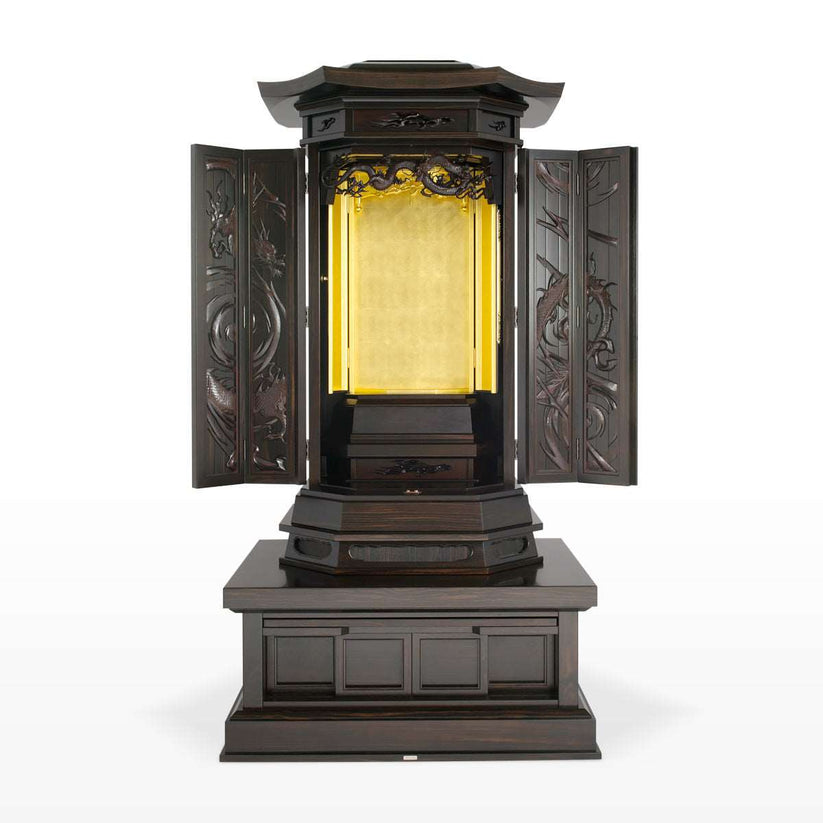
Although it is likely never going to happen, the dissolution of Soka Gakkai's organizational stranglehold would restore the fundamental human right of individual spiritual choice that the organization systematically destroys. Currently, millions of Japanese find their spiritual lives dictated by centralized religious authority that demands not just belief, but political allegiance, financial contribution, and social conformity. True spirituality emerges from personal reflection, individual conscience, and private communion with whatever sacred principles resonate with each person's unique life experience. Soka Gakkai's mass spiritual programming eliminates this intimate, personal dimension of faith by replacing individual spiritual development with institutional loyalty and prescribed practices like daily chanting at an expensive shrine (butsudan).
The disbandment of Soka Gakkai would represent more than the removal of a problematic religious organization—it would signal Japan's commitment to genuine democratic renewal and national revitalization. Without the distorting influence of a $100 billion religious conglomerate directing political outcomes, Japan could develop economic policies based on market realities rather than sectarian preferences. Political parties would be forced to compete for votes based on policy merit rather than religious allegiance, potentially breaking the stagnant political patterns that have persisted for decades.
The tax revenue currently sheltered within Soka Gakkai's religious exemptions could be redirected toward genuine public investment in infrastructure, education, and innovation. Most importantly, Japanese citizens would be free to participate in democracy as individuals rather than as members of a religious collective, restoring the individual agency that is essential for a dynamic, responsive political system. Japan's path out of stagnation requires not just economic reform, but the fundamental democratic reform that comes from eliminating religious authority from secular governance.
Although it is likely never going to happen, the dissolution of Soka Gakkai's organizational stranglehold would restore the fundamental human right of individual spiritual choice that the organization systematically destroys. Currently, millions of Japanese find their spiritual lives dictated by centralized religious authority that demands not just belief, but political allegiance, financial contribution, and social conformity. True spirituality emerges from personal reflection, individual conscience, and private communion with whatever sacred principles resonate with each person's unique life experience. Soka Gakkai's mass spiritual programming eliminates this intimate, personal dimension of faith by replacing individual spiritual development with institutional loyalty and prescribed practices like daily chanting at an expensive shrine (butsudan).
too can find the nihilistic denial of spiritual reality.
Soka Gakkai's $100 billion financial empire extends far beyond religious activities into the very heart of Japan's corporate establishment, creating a shadow network of economic influence that operates through deliberate opacity and strategic positioning within key industries. The organization's sophisticated economic operations, formalized through its Culture Bureau's dedicated Economics Department established in 1961, suggest decades of systematic corporate infiltration and influence that remains largely hidden from public scrutiny. While the specific identities of Japanese CEOs and corporate leaders connected to Soka Gakkai are carefully concealed—reflecting both the organization's culture of secrecy and Japan's discrete approach to religious affiliations in business—the cult's massive financial assets require sophisticated management that inevitably involves relationships with major banks, investment houses, and corporate entities.
The evolution of Soka Gakkai's membership from marginalized populations in the 1950s to a more affluent and educated base suggests that many adherents have ascended to positions of corporate leadership while maintaining their sectarian loyalties, creating potential conflicts of interest where business decisions serve religious rather than shareholder or national economic interests. This corporate shadow network, combined with the organization's direct political influence, enables Soka Gakkai to shape Japan's economic policy from both ends—influencing government regulation through political control while simultaneously directing corporate response through hidden adherent networks, creating a form of economic manipulation that undermines both free market principles and democratic governance.
When Japanese citizens are freed from organizational spiritual control, they can explore Buddhism, Christianity, Shintoism, or any other spiritual path—or choose no spiritual path at all—based on authentic individual personal conviction rather than cult indoctrination that leads to political control. This return to individual spiritual autonomy would not only liberate millions of Japanese from psychological manipulation but would also foster the kind of independent thinking and personal responsibility essential for both spiritual fulfillment and democratic citizenship.
The authentic Buddhist path, as outlined in the original Nikayas, calls for direct personal realization of the immortal Self (atman) through individual spiritual practice rather than submission to institutional hierarchies that have distorted Buddhism's core teachings. Modern sectarian organizations like Soka Gakkai have perpetuated the fundamental misunderstanding of anatta (non-self), transforming what was meant to be a via negativa method for recognizing the eternal soul into a nihilistic denial of spiritual reality itself.
I think Japanese seekers would benefit from returning to the Buddha's original instruction to "seek the Atman" through personal meditation and wisdom rather than accepting the commentarial interpretations that have reduced Buddhism to mere moral humanism. The Buddha's repeated teaching "na me so atta" (this is not my soul) was never intended to deny the existence of the immortal self, but to guide practitioners away from identifying with temporary phenomena toward direct realization of their true spiritual nature - a journey that requires individual contemplation and inner awakening rather than dependence on organizational doctrines that have strayed far from Buddhism's original metaphysical foundations.
________
Japan is on the road to nowhere...

No comments:
Post a Comment
Note: Only a member of this blog may post a comment.