________
Japan's Economic Timebomb Is About To Hit US Markets, Mortgages & Retirement Savings: What You Need To Know
December 14, 2025 | By G. Calder
Japan – one of the world's leading economies and the largest foreign holder of US Treasury debt – is entering a phase of rising interest rates following three decades of ultra-low borrowing costs. With a debt-to-GDP ratio near a mammoth 235%, even a modest rate rise threatens to destabilise its domestic finances. But the real shockwave will be felt abroad, with Japan holding a staggering $1.2 trillion in US Treasuries – more than any other country. Analysts warn that as Japanese yields rise and the infamous yen "carry trade" unwinds, hundreds of billions of dollars could leave US markets. That would lead to higher US interest rates, more expensive mortgages and credit, and increased volatility in stocks, bonds, crypto and retirement savings.
As the biggest owner of US debt, Japan's moves will affect Americans – and anyone holding US-based assets like most stocks – more than they realise. A policy adjustment in Tokyo could affect millions of people in the US and around the world, who are worryingly unaware how closely linked their savings are to an Asian central bank's next move.
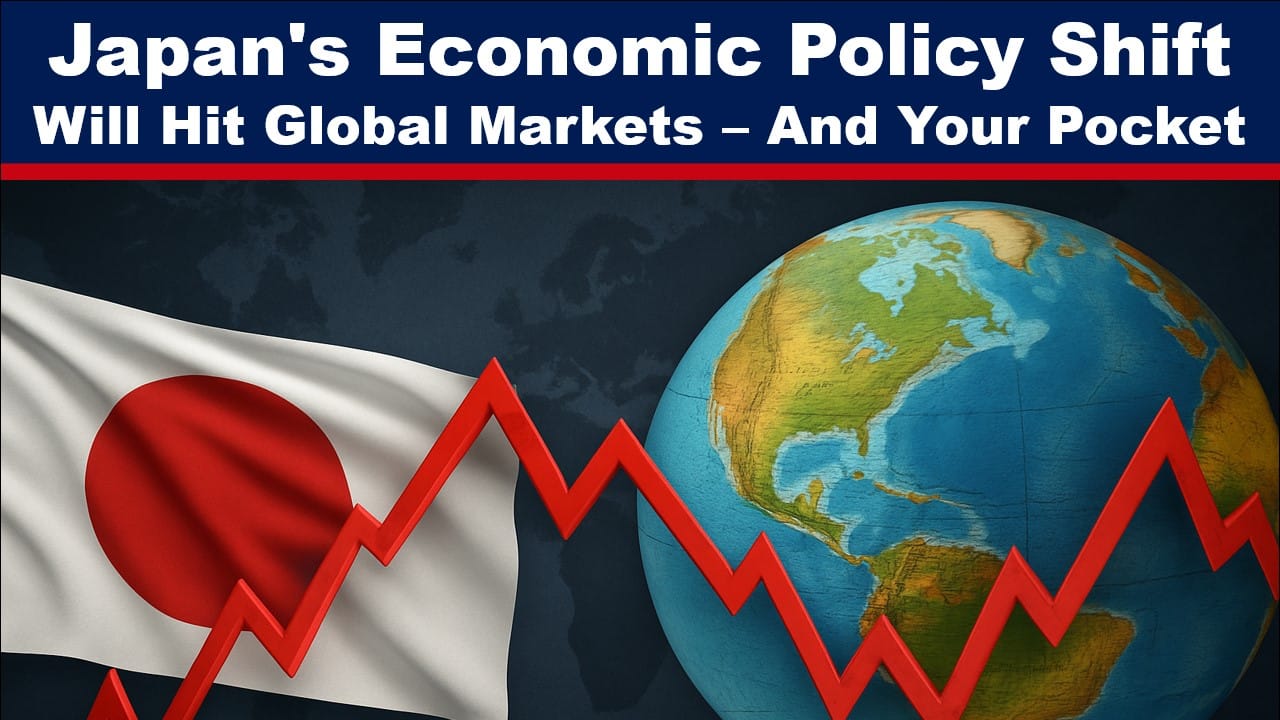
The country's public debt is currently 235% of GDP. It's by far the biggest of any advanced economy, and it's double the US’ already-alarming 120%. How did it get so bad?
In the early 1990s, Japan's stock and real-estate bubble burst. The country endured three "lost decades" of zero growth, low inflation, and repeated failed attempts at economic stimulus. The government borrowed aggressively to support the economy, while the Bank of Japan (BoJ) pushed interest rates to zero and even negative levels, meaning you paid back less than you borrowed. The BoJ ended up buying half of all outstanding government bonds (debt), effectively financing public deficits at near-zero cost.
The system worked while inflation and yields stayed low. Both of which are now coming undone.
The Financial Earthquake With Tremors Felt Worldwide
In November this year, Japan announced a major stimulus package exceeding 18 trillion yen ($117 billion). This isn't totally out of the ordinary given the country's post-bubble attempts, but markets reacted in a way Japan had not seen in nearly two decades: Japanese bond yields spiked sharply.
This reaction signalled a greater shift: investors no longer believe that Japan can indefinitely finance enormous deficits at near-zero rates. Higher yields mean higher interest rates, higher refinancing costs, and much more expensive interest payments on their own debt. Even small increases in borrowing rates threaten to erode the country's fiscal stability because of the vastness of the debt itself.
So, Why Is This America's Problem?
Japan being the single largest foreign buyer of US Treasury bonds is a critical point here. The reason for the massive $1.2 trillion value is simple – while borrowing in Japan was almost free, institutions could take on hundreds of billions in debt and invest it in the US' high-yield bonds. A Japanese pension fund, for example, would earn no interest if invested at home. So, borrowing at 0%, getting 4-5% returns on US Treasuries and pocketing the difference was as good as free money.
However, as rates rise in Japan and its own bond yields increase too, it becomes less worthwhile to invest abroad. Including currency hedging risk, the reward is suddenly much lower today than in previous decades. As a result, an unprecedented US bond sell-off could be imminent, with hundreds of billions of dollars leaving the US debt market and back towards Japan. If that happens, the US faces:
• Falling Treasury prices and rising yields• More expensive mortgages, credit, and business loans• Higher interest costs on federal debt• Volatility in stock and cryptocurrency markets
The US already spends $1 trillion per year on interest payments alone – more than its entire defense budget. Every percentage point increase in rates adds $200-300 billion to federal interest payments. That increase can only come from higher taxes, spending cuts, or money printing – all of which bring profound consequences.
Japan Crashed Markets the Same Way in 2024
Before considering all of this hypothetical, we must return to last year when the Bank of Japan’s minor adjustment triggered massive US market moves. In August 2024, we experienced:
Japan Crashed Markets the Same Way in 2024
Before considering all of this hypothetical, we must return to last year when the Bank of Japan’s minor adjustment triggered massive US market moves. In August 2024, we experienced:
• S&P 500 declined 8%• Nasdaq dropped 10%• Bitcoin price fell 23%
These moves reversed after the BoJ retreated. This time, Japan may not have the option for a U-turn.
How the Yen Carry Trade Worked
For decades, the "yen carry trade" was one of the most significant – and least discussed – engines of global liquidity. The mechanics were simple
How the Yen Carry Trade Worked
For decades, the "yen carry trade" was one of the most significant – and least discussed – engines of global liquidity. The mechanics were simple
1. Borrow cheaply in Japan – at or below 0% interest2. Invest abroad in higher-yielding assets, especially "super safe" US Treasuries3. Take the difference as profit
The mass adoption of this tactic by hedge funds, banks, insurers, and institutional investors spread across global finance and the volume of yen-funded investments reached trillions of dollars.
But when Japanese rates rise, this trade becomes less profitable – or even outright unviable. Investors need to unwind positions, selling their Treasuries, stocks, REITs and other assets. The result can be sudden, broad-based market declines.
Please go to The Expose to continue reading.
But when Japanese rates rise, this trade becomes less profitable – or even outright unviable. Investors need to unwind positions, selling their Treasuries, stocks, REITs and other assets. The result can be sudden, broad-based market declines.
Please go to The Expose to continue reading.
________
A five-nation power bloc is being planned with Russia, China, India and Japan. It doesn't appear to be a secret any longer. This was likely all negotiated well before Trump arrived in Japan.
Related:

No comments:
Post a Comment
Note: Only a member of this blog may post a comment.