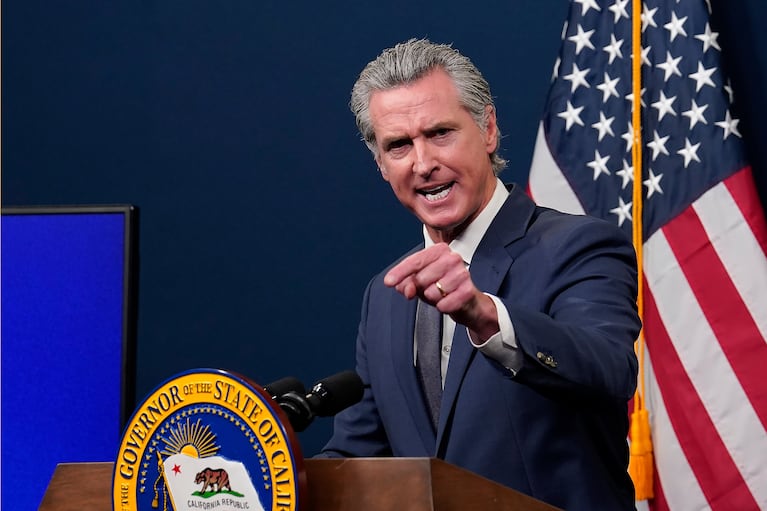
The fact that Californians must pay both state and federal income taxes highlights the injustice of the system. Unlike sales taxes or property taxes, which at least relate to voluntary purchases or ownership, the income tax directly seizes a portion of a person's labor. Put bluntly, a tax on income is a tax on life itself—an arrangement that can be equated to a form of modern slavery, where individuals are compelled to hand over the fruits of their work under threat of punishment. These taxes take a percentage of your energy output. And if this isn't bad enough, Gavin Newsom has become a favored investment for George Soros, who poured over $10 million into Newsom's political projects while California funneled nearly $18 million in taxpayer funds to Soros-backed organizations (weaponized NGOs).
California ranks among the most expensive states in the U.S. for both home ownership and rent, with median home prices more than double the national average and rental costs second only to Hawaii. In cities like San Francisco, San Jose, Los Angeles, and San Diego, housing demand far outstrips supply due to strict zoning laws (bureaucratic inefficiency and power), limited buildable land, and high construction costs, all of which drive prices even higher. As a result, Californians often spend a greater share of their income on housing than residents of almost any other state, making real estate and rent burdens a defining factor in the state's overall cost of living.
While the nation has seen violent crime decline in 2024, California bucked the trend with a 13% increase in violent crime rates—one of only nine states to experience double-digit increases. California now has approximately 486 violent crimes per 100,000 residents, well above the national average of around 380-390. This divergence isn't coincidental: it's the direct result of soft-on-crime policies in the "progressive" state, Proposition 47's effective decriminalization of theft under $950, and progressive prosecutors who treat career criminals like victims. Californians are less safe than the average American, despite paying higher taxes for law enforcement. If Newsom can't keep Californians safe in his own "golden" state (golden parachutes for state employee retirement pensions), why would Americans trust him to protect the entire nation?
California employs over 200,000 state workers—a sprawling bureaucracy that costs taxpayers billions in salaries, benefits, and pensions (see CalPERS $100K Club). While some government services are essential, California's bloated public sector has become a textbook case of diminishing returns: more employees haven't meant better services, just higher costs and more intimidating bureaucratic red tape. Californians paying some of the highest taxes in the nation to fund this ever-expanding workforce, yet still face crumbling infrastructure ($300 a year per car inspection), failing schools, and basic services that don't work. This isn't just a California problem—it's a warning about what happens when government grows unchecked. America doesn't need a president who thinks the solution to every problem is hiring more bureaucrats with ideological grudges.
Meanwhile, states like Texas and Florida show that people can thrive without being shackled to a state income tax. Residents in these states only pay federal obligations, keeping far more of what they earn. Californians, in contrast, face one of the heaviest combined tax burdens in the nation. This oppressive structure not only drains wealth from individuals but also stifles opportunity, entrepreneurship, and long-term prosperity. The fundamental truth is clear: taxation of income is not simply unfair—it is an assault on freedom.
By contrast, Florida does not levy a state income tax at all. Florida residents only pay federal income taxes, meaning they keep a larger share of their earnings. This creates a major financial advantage for Floridians, particularly for middle and high-income earners. The difference in tax structure between the two states contributes to why California's cost of living feels especially heavy compared to Florida, despite both states offering large metropolitan areas and major economies.
________
Newsom's California archive:
More recent "Golden state" opportunities:
FBI: Pillaging the system in California...
California Dreamin' to California Sh*thole
California Dreamin' to California Sh*thole
America doesn't need a president whose state became a case study in how not to govern.

No comments:
Post a Comment
Note: Only a member of this blog may post a comment.