The Founding Father of Paper Money: How Benjamin Franklin Shaped American Currency
August 31, 2025 | By Abel Danger
When we think of Benjamin Franklin, we often picture a scientist flying a kite or a statesman signing the Declaration of Independence. But his role as a key figure in the history of American money is just as significant. Long before the U.S. dollar as we know it existed, Franklin was a passionate advocate for and innovator of paper currency, helping the colonies thrive and eventually break free from the British Crown's economic control.
In the early 1700s, the American colonies were at a significant disadvantage. They lacked gold and silver coins because they had to send most of them to Great Britain to pay for imported goods. This shortage of currency stifled their ability to grow their own economies. To solve this, colonial governments began printing their own paper money, known as "bills of credit" or "colonial scrip," which was backed by the promise of the colony to accept it for taxes.
Franklin was more than just a supporter of this system; he was a leader in it. In 1729, he published a pamphlet arguing for the benefits of paper currency. Later, as a printer, he created bills for several colonies and introduced groundbreaking anti-counterfeiting measures. He used "nature printing," a technique that transferred the intricate, unique patterns of leaves onto the bills, making them incredibly difficult to forge.
The British Crown, influenced by the BoE, saw the colonies' independent paper money as a threat to their economic power. In 1764, the British Parliament passed the Currency Act, which severely restricted the colonies from issuing their own currency. This move was one of the many policies that sparked outrage among the colonists, becoming a major grievance that contributed to the push for independence.
When the American Revolution began, the Continental Congress needed to finance the war. They relied on Franklin's long-held belief in government-issued paper money, creating the "Continental dollar." This new currency, while facing its own challenges, was a symbol of the new nation's economic independence.
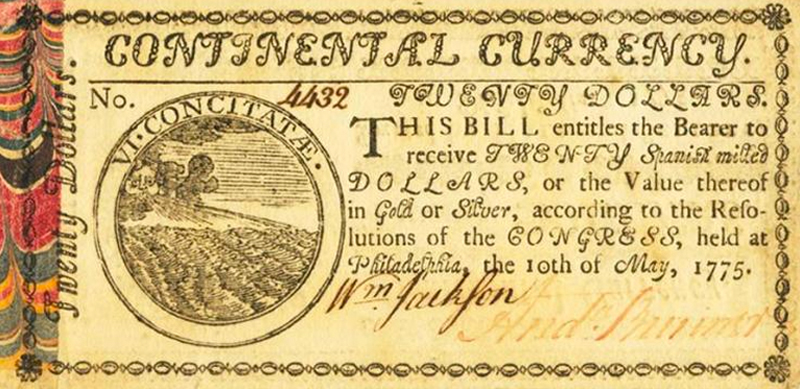
Franklin understood how Britain's restrictions on colonial currency and the requirement to pay taxes in scarce British coins created economic hardship for the colonists. He advocated for colonial paper money as a way to facilitate trade and economic growth independent of British monetary control. His 1729 essay "A Modest Enquiry into the Nature and Necessity of a Paper Currency" laid out the economic arguments for why the colonies needed their own monetary system.
Benjamin Franklin was an early pioneer in the fight against currency counterfeiting, using a variety of innovative and sophisticated methods rather than a single chemical. His approach was multi-faceted, combining unique materials and advanced printing techniques to make his colonial currency difficult to counterfeit. He incorporated muscovite mica into his paper to create a shimmering, reflective effect, and used a special black ink made from natural graphite, which chemically distinguished his bills from those of counterfeiters. Franklin also embedded colored fibers directly into the paper and, most famously, used "nature printing" by pressing actual leaves into printing plates to create a unique, intricate, and impossible-to-replicate vein pattern on the back of each note. These layered "security features" made Franklin's currency some of the most secure in the American colonies.
It's one of those historical ironies where someone who fought for monetary sovereignty ends up symbolically endorsing a system that concentrates monetary power in ways Franklin found troubling.
________
Hey Ben, look what was created under the Federal Reserve:

No comments:
Post a Comment
Note: Only a member of this blog may post a comment.